Author: KL

  • Romanticized Myth or Pioneering Reality? [Mid-19th Century Sunbonnets, Part 2]

    Romanticized Myth or Pioneering Reality? [Mid-19th Century Sunbonnets, Part 2]

    If you haven’t read Part 1, start there.

    The Sunbonnet: Genuine frontier clothing, or inaccurate cliché?

    Picture in your mind a woman of the 1800’s living on the American frontier. What do you see? She is probably riding in a covered wagon or hanging laundry nearby a log cabin. This woman is likely wearing a printed cotton “calico” dress, an apron, and a sunbonnet.

    Perhaps the enduring popularity of iconic stories written by Laura Ingalls Wilder and Mark Twain, including Little House on the Prairie and Huckleberry Finn, have aided in the perpetuation of this image. Surely other pop-culture touchstones, such as the TV version of “Little House” and the Oregon Trail computer game of the 1990’s, have contributed as well.

    Many generations after falling from use, the pioneer woman’s headwear has nevertheless remained intact in our imaginations. But, is this durable image of the bonnet-wearing American woman leading a life of hardship on the edge of civilization based in truth? Or, like the iconic double-horned helmet which we erroneously associate with Viking warriors, is the sunbonnet merely a persistent modern myth? I had to find out for myself whether the cliché of a pioneer woman in a sunbonnet is based in reality or fiction.

    (more…)
  • Snarky skincare advice for backwoods women [Mid-19th Century Sunbonnets, Part 1]

    Snarky skincare advice for backwoods women [Mid-19th Century Sunbonnets, Part 1]

    Why did 19th century women wear their sun bonnets, or not?

    Women who don’t wear bonnets…

    • make themselves “as rough and coarse as ever [they] can, by way of being independent.”
    • look– at age 26– “like a runnet* bag that had hung six weeks in the chimney corner”
    • make themselves “too ugly for any use except scaring the crows off the corn”

    …according to a Missouri newspaper column published in 1849.

    * A rennet-bag is the fourth stomach of a ruminant (cow), a traditional natural source of enzymes for making cheese.

    (more…)
  • Project Log: How to Make an 18th Century “Housewife” Sewing Kit

    Project Log: How to Make an 18th Century “Housewife” Sewing Kit

    Meet the Housewife

    In this case, a housewife isn’t a person.


    I’ve got a notion

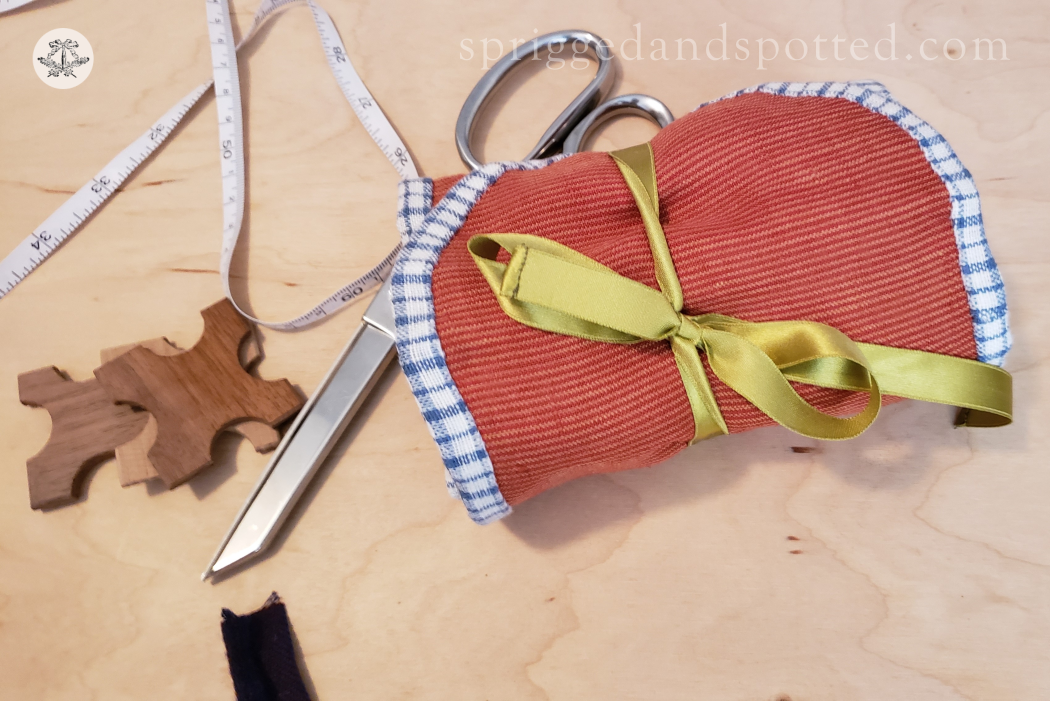
    I like the word “notion.” It can mean a personal inclination or a general concept, but it can also refer to little tools and supplies. When used to describe physical objects rather than ideas, “notions” usually refer to common sewing tools and consumable necessities such as thread and buttons. Type the word into an image search on your favorite search engine and you’ll see collections of needles, thread, straight pins, safety pins, thimbles, ribbons, pincushions, snaps, measuring tapes, and more. Notions often enter into project planning as an afterthought, once primary fabrics being used to construct a garment have been selected. But, having the perfect bits and bobs right at hand when you need them can make a project come together much more smoothly than if you have to stop working to find what you need.

    (more…)
  • Vintage Book Review: A Woman’s Story of Pioneer Illinois by Christiana Tillson [A Vibrant Retrospective]

    Vintage Book Review: A Woman’s Story of Pioneer Illinois by Christiana Tillson [A Vibrant Retrospective]

    A first-person account of log cabin living as a young wife and mother.

    Most of us can name at least one or two historically significant memoirs, such as Elie Wiesel’s Night or the Narrative of the Life of Frederick Douglass. Such first-person accounts of history add richness and personality to the dry study of dates, places, and politicians which usually dominate history lessons. While getting a bird’s eye view of historical events is important, well-crafted memoirs written by those who survived the trials of past events provide us with the “story” part of history. This year, I had the pleasure of encountering an unusual and underappreciated historical memoir of this kind, A Woman’s Story of Pioneer Illinois by Christiana Holmes Tillson.

    (more…)
  • Festoons of Fringe: How to turn Fun Fur and Eyelash Yarn into Durable Christmas Garland

    Festoons of Fringe: How to turn Fun Fur and Eyelash Yarn into Durable Christmas Garland

    The problem of what to make with Fun Fur or Eyelash Yarn

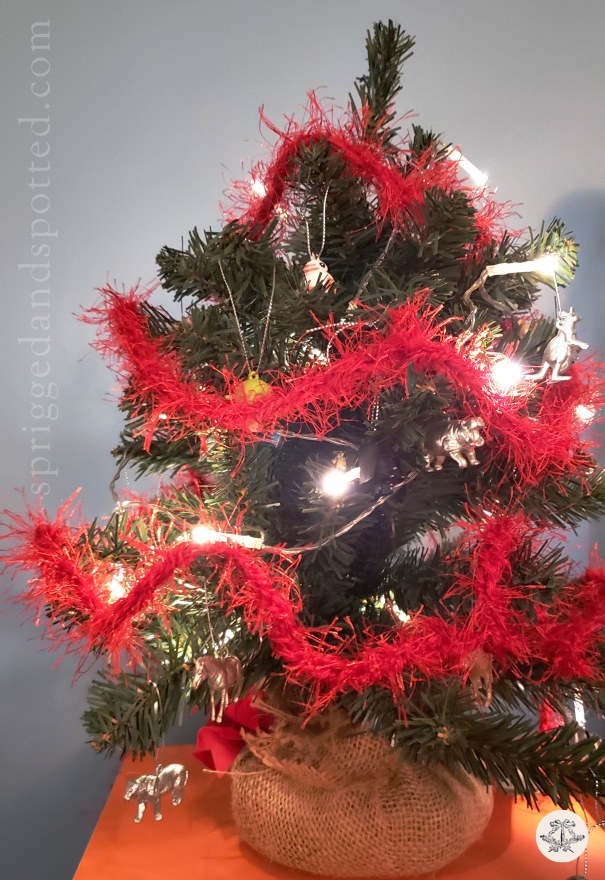
    Novelty yarn can be a challenge to use, not only because it can be awkward to crochet or knit with, but because its oddness makes it unsuitable for making elegant accessories or practical items for the home. When “eyelash yarn” and “fun fur” polyester (aka acrylic) yarns were popular in the early 2000’s, I made a tubular scarf, but didn’t end up wearing it much. This kind of glossy yarn is still available for purchase in saturated colors at craft stores. So, what do we do with leftover or bargain bin fringed yarn? Having made myself a knitting fork, also known as a lucet, earlier this year, the perfect Christmas-season application for this unique yarn occurred to me: garland.

    (more…)