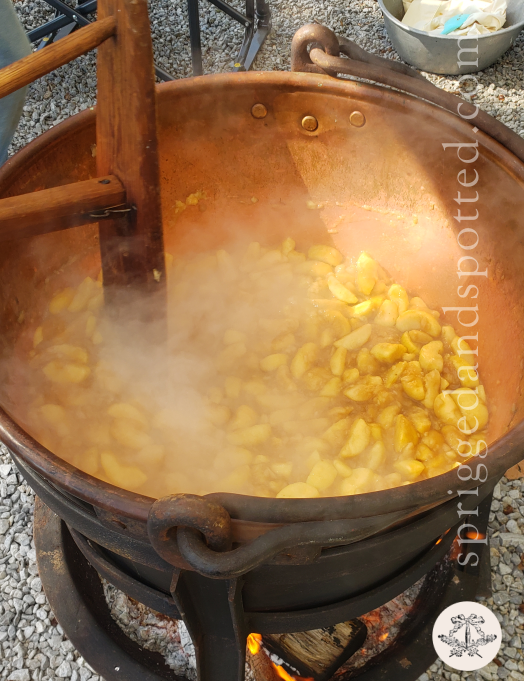
If you haven’t read What is Apple Butter? Part 1, I recommend you start there.
In Part 1, we talked about the essence of the substance, what apple butter is and how it is made. Now, it’s time to look into where apple butter came from and how it remains relevant today. No matter where you begin, I welcome you to explore with me the down-home culinary delight that is apple butter.
History of Apple Butter
Where Does Apple Butter Originate?
Like American sunbonnets, the history of apple butter can be challenging to research because of the homespun nature of the product. Families, like my own, have passed down the methods mostly informally from generation to generation. But, with some effort, we can find evidence of the roots of apple butter in humble, tucked-away places.
Earliest American Apple Butter
To my delight, I have been able to confirm that this food tradition is indeed an old one. Apple butter has been gracing the tables of American households since at least the late 1600’s. In one instance, dated May 1693, appraisers of the estate of Nathaniel Ennis, of Somerset County, Maryland, saw fit to note “a crock of apple butter” among the goods of value he possessed at his death.
More hours spent sifting through dusty handwritten documentation will be required to thoroughly research this early apple butter era. For now, though, this kernel of information indicates apple butter was an established food on the Eastern Shore of the Chesapeake Bay, not far from Tangier Island, Virginia.


Strong ties with German-American Colonists
References to apple butter, especially in Pennsylvania where many German immigrants were concentrated, appear in documentation from the 18th century as well. Although not exclusively confined to German communities, the custom of making apple butter has been especially prevalent among families with German heritage.
A super thick fruit preserve similar to apple butter, called “latwerg,” shows up among German recipes from the Middle ages. At that time, latwerg was intended to be a remedy for illness, but was made in much the same way as American apple butter. The Pennsylvania Dutch (Germans) in early America have continued to refer to apple butter by a German-derived name that reflects old world inspiration, although the spelling of the word varies widely. Thus far in my research, I have found it spelled “lotwaerick,” “lodt varrick,” and “lattwarrick.”
How did apple butter popularize and spread?
Other types of fruit preserves existed in British and German culture during the pre-Revolutionary era in the American colonies (including Canada), and those methods may have influenced the development of apple butter on this side of the Atlantic. The migration of families from the coastal regions into the backcountry, down the Great Wagon Road, and later into the Midwest helped to expand the practice geographically.
The tradition of making apple butter took hold and has survived to the present in areas that have most retained their rural character, such as (but not limited to) parts of Appalachia, Pennsylvania, and Midwestern farming communities. By the mid-19th century, an “apple butter” category often appears in newspaper announcements of county level agriculture fair competition winners. This indicates apple butter was well established among the wide variety of fruit preserves of the era.
Military & Institutional Use of Apple Butter
The height of apple butter’s popularity in the U.S. seems to have stretched from the American Civil War through the Great War (World War I). During this period, apple butter is often seen listed among major pantry staples like wheat, corn, beans, and cabbage. For example, an infirmary (poor house) in Ashland, Ohio published its receipts and expenditures for 1855-1856, listing 60 gallons of apple butter (citation).
Apple butter kept soldiers fed as well. Community newspapers in the 1860s sometimes printed recognition for donations from individual families in support of Union troops, with many 1 gallon crocks of apple butter conspicuously included among foods sent to soldiers in need.
By the 1920s though, advertisements for large manufacturers (like Heinz and Libby’s) abound and articles chronicling bygone ways start to become more frequent, and the slow decline of old fashioned outdoor-made apple butter seems to be underway.

Eastern shore of Maryland, 1961
“As each batch of butter is finished, it goes into glass jars and into storage cupboards in the camp kitchen. The extra butter that can be sold is apportioned out among the many orders.”
(Evening Star – Wash. D.C, Dec 3, 1961)

Early Published Apple Butter Recipes & Using Copper Cookware
The Kentucky Housewife, a cookbook, documents one of the earliest formally disseminated recipes for apple butter I have thus far been able to find.
The Kentucky Housewife was written by Mrs. Lettice Bryan and published in 1839. Mrs. Bryan’s book is now recognized as one of the most important early American cookbooks (citation). In the method she describes for making apple butter, all of the essentials are there: apples, cider (juice), spices, and labor. She instructs cooks to stir constantly, and gives suggestions on how to determine when the butter is “almost thick enough to slice.”
Copper Kettles
Famously, apple butter has been traditionally cooked in massive copper pots (as my family still does). Mrs. Bryan makes note of necessary precautions one should take when cooking in a copper vessel, saying one “must not suffer the butter to remain in it a minute longer than is actually necessary to prepare it, or it will imbibe a copperish taste, that will render it not only unpleasant, but really unhealthy.” Modern cooks would be prudent to heed this advice as well, because while dietary copper is a necessary micronutrient, the metal can also be toxic if too much is ingested.
Newly manufactured copperware is still used in distilling spirits and making foods like kettle corn today, but extra care must be taken to ensure a safe product results when cooking acidic foods like apples. Using only spotlessly clean, untarnished copper, as well as removing the apple butter from the pot immediately after cooking seem to be time-tested ways of producing wholesome results. While millions of Americans have consumed copper-kettle cooked apple butter over the centuries with no ill effect, every cook and consumer (past and present) is responsible for using their best judgement regarding safe food preparation.
Preserving History – Storing Apple Butter
Although today we use the familiar and iconic glass mason jars with tightly sealing aluminum lids to can apple butter, these containers were obviously not available to our ancestors 300 plus years ago. Before the advent of modern canning methods, families used ceramic crocks fitted with tight coverings for storing preserved foods such as sauerkraut, pickles, and fruit butters.
Curved redware jars designed specifically for storing apple butter survive in Pennsylvania museum collections, and cylindrical stoneware crocks of various sizes were employed in the 19th and early 20th centuries for keeping apple butter. Many old recipes note that paper (sometimes treated with wax or spirits) should be tightly wrapped over the jars and bound with string until the contents was to be opened for consumption. This method did the job well for much of history, but to satisfy modern expectations for minimizing food safety risks, mason jars with correctly sealed lids are the way to go in the 21st century.
Modern Kitchen Apple Butter
Although our diet in America does not depend as much on food spreads as it once did, the nostalgia and tradition remains. Many people continue to enjoy canning their own produce and stocking their pantries with foods that feel comforting, and apple butter certainly fits that bill. As an apple butter evangelist, I do not fault anyone who does not have access to iron-cogged peelers, huge pots, and a campfire-friendly back yard.
Kitchen-made apple butter is a perfectly valid way to make the stuff too. I have made it that way myself. It may be hard to achieve the same flavor and texture of apple butter cooked in a copper kettle over an open fire, but the old process, while beloved, isn’t practical for most households in our current era. Many home cooks have developed recipes which capture the fall apple abundance into jars by cooking down the fruit in their kitchens. The essential steps remain the same, and the product can be customized (adding different spices, vinegar, etc) to suit the taste of each cook.
I am still in search of a favorite kitchen-based recipe to satisfy my apple butter cravings, but I’m certain one is out there. For longer than Americans have been making chocolate chip cookies (Toll House cookies originated in in 1938), home cooks have been using stovetops and ordinary kitchenware to “put up” the apple crop by making fruit butter out of it. Here are two such kitchen-style recipes from 1921.


Finding some: Where to get apple butter?
Mass produced
(A lackluster ambassador for apple butter).
Commercially produced apple butters exist, but they cannot hold a candle to most homemade made versions. Interestingly, the first product sold under the Smucker’s brand was “cider apple butter”, and it remains part of their product line to this day. Beyond Smucker’s apple butter, White House and Musselman’s seem to be the most widely available where I live.
The runny consistency (of Musselman’s and White House) is more like heavily spiced apple sauce than true apple butter. I don’t know if their recipes have changed over the decades, but what’s available mass-market from these brands today is not really suitable for spreading on a warm biscuit. These factory-produced incarnations of apple butter work well in cooking (chili, baked goods, etc). I keep some on hand for just that purpose.
This is the cheapest and easiest option, but don’t let the often uninspiring taste and texture of this type of apple butter sour your view of all that goes under the name “apple butter.”
Small Commercial Producers and Non-profits
(Best of both worlds).
Find a local farmers’ market, an Amish farm stand, or a country church, and you are likely to be able to purchase a far superior product to the factory-based brands. If you’re lucky, you might find an organization producing it the old-fashioned way like my grandparents did. Here you will find a variety of styles and qualities and you might pay a little more (often supporting a small business or church), but you will avoid the work of making and canning apple butter yourself.
Small-batch commercial apple butter can easily stand alone as a topping for ice cream or on fresh biscuits and toast.
Make it yourself (DIY)
(Thrifty but time-consuming.)
Whether you chose a crock-pot recipe or you do it the outdoor way (in a huge copper pot) like my family does, this is the only way to ensure you have apple butter just the way you like it. This is the most economical option, but it takes time, attention, and a little know-how. The ingredients for apple butter are not really all that special. It’s the process and the labor that makes this stuff the prized treat worthy of generations of family tradition.
This apple butter is the kind you might give as a gift. Maybe don’t give it to your boss’s bratty nephew, though. Make sure it goes to someone who will appreciate the love that went into the jar.

How to Eat Apple Butter
Apple Butter on Bread
My research has shown that, throughout its history, apple butter has always been primarily enjoyed by spreading it on bread.
Spreading apple butter on biscuits, toast, rustic sourdough, or yeast rolls is still an amazing way to enjoy high-quality apple butter. But, how many jars of apple butter have languished in the back of pantries and refrigerators after all the biscuits are gone?
Apple butter in Cooking
Apple butter can be used for so much more than toast. As old-school apple butter makers have long known, this stuff works well in many sweet and savory recipes, from cakes, pastries, and muffins, to barbecue sauce and chili. It can be used to sweeten hot oatmeal or glaze a Christmas ham. The uses are only limited to your imagination.
The Continuing Relevance of Apple Butter
Although I grew up in suburbia, I learned first-hand about the delights of apple butter in the intimate environment of a handed-down family tradition. Despite having this singular experience of apple butter, I intuitively knew as a child that using such an archaic and anachronistic process meant that the practice of making apple butter was old. But, I didn’t know how widespread it was.
In the years since, it has been a joy to find out that apple butter has been beloved not just by my family, but has also taken part in sustaining the nation I call home.
In his 2010 book meticulously cataloging southern apple varieties, Creighton Lee Calhoun says, “The making of apple butter by rural families was common in every apple-growing area of this country, most certainly including the South.” Historic apple butter making roots can be found from New England and New York to Alabama and Georgia. Missouri and Mississippi. Washington State and Canada. Tucked into pantry corners and gleaming from supermarket shelves.
The making of apple butter by rural families was common in every apple-growing area of this country…
Creighton Lee Calhoun, 2010
Always going, never gone.
Since at least the 1880’s, journalists writing for small town newspapers have been noting the slow decline in the prevalence of making apple butter using the old ways. Big brand advertisers seemingly shot themselves in the foot by aiming to supplant grandma’s recipes on kitchen tables. They leaned on the nostalgia of homecooked comfort food while simultaneously undermining the source of that nostalgia.
Despite the success of commercial options, countless newspaper articles throughout the late 19th and 20th centuries continued to heap praise on homemade apple butter and commend those who carried on its traditions.
Today, local festivals still celebrate the bounty of fall fruits and the most communal of all fruit preserves, apple butter, and prizes continued to be awarded annually in thousands of county fairs for homemade versions of this stuff that has fed armies.
Apple butter is remains celebrated part of rural life. Huge shiny new copper kettles are still available and explicitly advertised as suitable for making apple butter (Bucyrus; Lehman’s). So, whether in a crock-pot on the counter or in copperware over a fire, all of the options remain open for producing generous quantities of apple butter in this century, in batches small or large.
Long before the pumpkin spice latte came on the scene, apple butter was at the heart of autumn coziness.
We have so many alternatives to satisfy a sweet tooth or spread on bread, but apple butter continues to earn its place on our tables and in our tummies generation after generation. It’s a taste of bygone days well worth preserving. It was old fashioned and out-moded at least a century ago, and yet it lives on.

Conclusion: Don’t stop stirring (Apple Butter Continues)
No matter what your family history is or how you choose to make it, apple butter is an Autumn comfort food that has stood the test of time. I’m grateful it has been adapted to accommodate modern lifestyles and remained an important part of the culinary fabric of the United States. This overview only scratches the surface, but I hope it has been a helpful introduction to the history and the culture of apple butter. I could go much deeper into the development and evolution of this humble but delectable food, but that will have to wait until a future project.
Our 6th Generation joins in.
In recent years, my family has introduced our 6th generation on record (my kids) to the process of laboriously and joyfully producing this classic American pantry staple. It’s an old-timey treat that deserves to be adapted and preserved for many generations to come. I hope that you will think about the love and labor that apple butter represents the next time you pop open a mason jar of smooth, appley goodness and enjoy eating it on warm bread.

APPLE BUTTER. (A Poem from 1910)

"Oh, goodness me!" said Johnny Green,
   "My ignorance is utter!
I don't know what the people mean,
   Who talk of 'apple butter.'
Do you think anybody would
  Apples with butter spread?
And do you think they could be good
  To eat instead of bread?"

"Oh, Johnny Green, you're green indeed!"
   Said little Tommy Smart:
"Although your history books you read.
   And learn their lore by heart,

If common knowledge you could claim,
'T would not be to your loss;
Why, apple butter's just the same
As our own apple sauce.
And in some distant country spot.
Where apples grow quite thick.
They cook it in a great big pot.
And stir it with a stick"

Then Johnny Green he wagged his head.
And Tommy Smart wagged his;
"What apple butter is!"
"I am so glad to know," John said.

(Rock Island, Illinois. 1910)
If you haven’t read What is Apple Butter? Part I, your “Apple Butter Frolic” is not complete.
See more like this from Sprigged & Spotted.
Quiz yourself with Trivia Puzzles
Get involved with Crafts & DIY
Question and explore with Reflections
Take a closer look at Historic Objects
Looking for ideas for your own historically inspired project?
Head over to Pinterest for more images and extant examples of garments, objects, and tools from earlier times.
Selected References for What is Apple Butter? Part 2.
- Calhoun, Creighton Lee. Old Southern Apples: A Comprehensive history and description of varieties for collectors, growers, and fruit enthusiasts. 2010. Chelsea Green Publishing, Vermont
- The Ashland union (Ashland, Ashland County, Ohio), June 25, 1856
- Bryan, Lettice. The Kentucky Housewife. 1839
- Lamneck, John Howard. The Country Squire, The Romance of a Law-Abiding Citizen. 1960
- Frederick, J. George. Pennsylvania Dutch Cookery. “Pennsylvania Dutch and Their Cookery”. 1935
- Koch und Kellermeisterei. 1566.
- Riesenberg, Emily. Preserving at Home: A Book for the Home Economist. 1921, Rand McNally & Co.
Leave a Reply