Tag: 19th century

  • Women’s Work Aprons of the 1840s and 1850s shown in photos. A Reference.

    Women’s Work Aprons of the 1840s and 1850s shown in photos. A Reference.

    Early Photographic Images of American Women Wearing Aprons

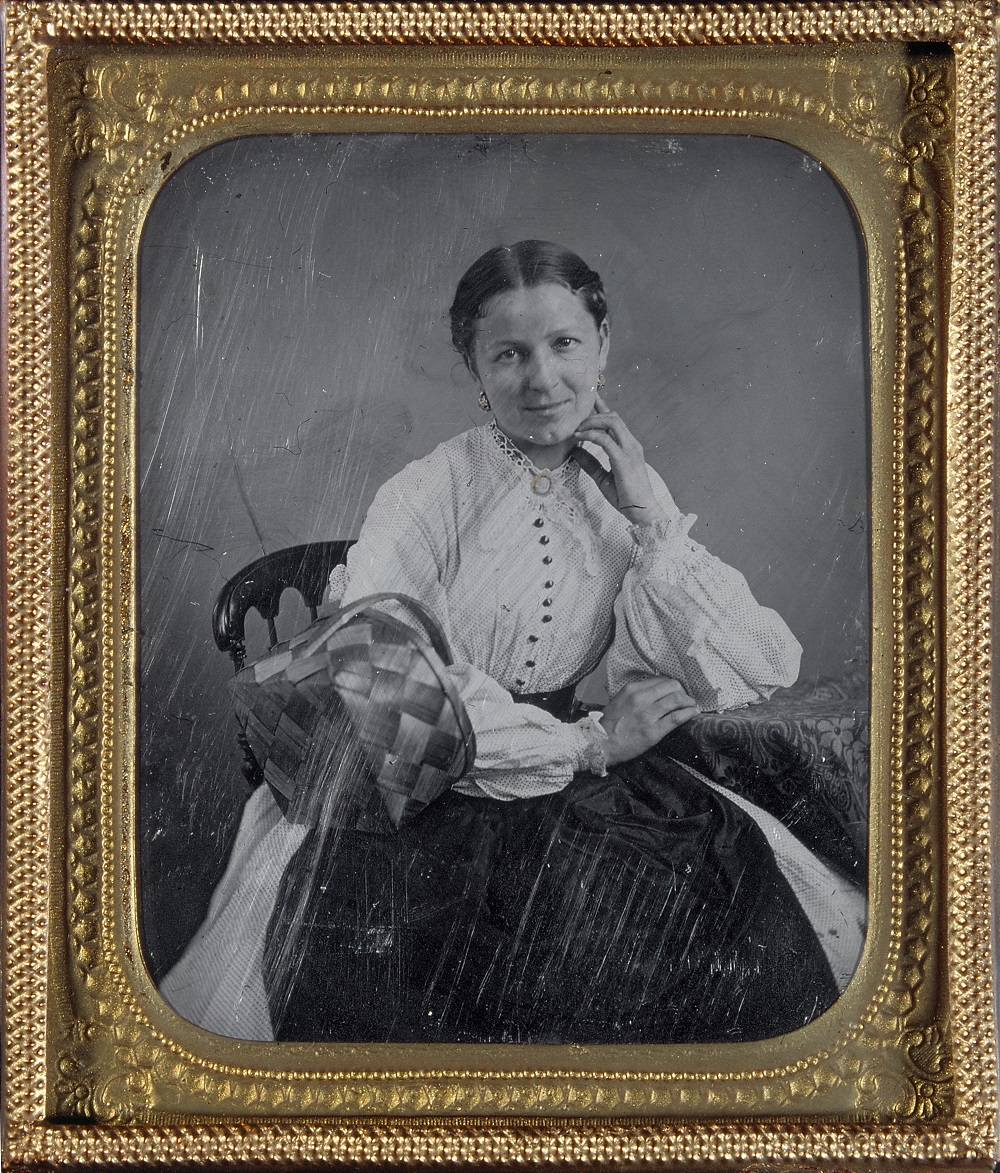
    Curious to understand how aprons were constructed and worn by American women in the mid-1800s, I have collected some example photographs and references. The second quarter of the 19th century – roughly 1830 to 1855 – interests me the most.

    Following the earlier Regency fashions and preceding the hoop skirts and bustles later in the century, this pioneering era at the leading edge of the industrial revolution seems to be underappreciated by modern students of fashion history. In the mid-19th century, the aprons worn by working women were often of the “half-apron” style with the strings made long enough to wrap around and tie in the front. Smocks and over-shirts were worn over clothing as well, especially by men and boys. Pinafore type aprons also can be seen in use in this era.

    (more…)
  • What is Apple Butter? Part 2: History, Evolution, & the Making of a Beloved Pantry Staple

    What is Apple Butter? Part 2: History, Evolution, & the Making of a Beloved Pantry Staple


    If you haven’t read What is Apple Butter? Part 1, I recommend you start there.

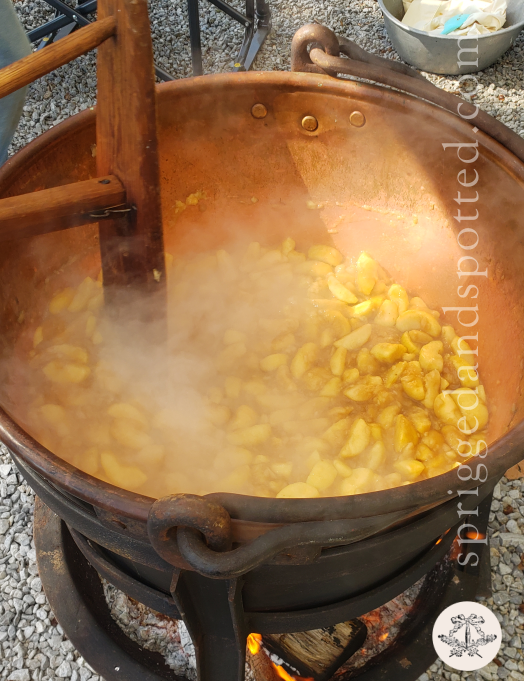
    In Part 1, we talked about the essence of the substance, what apple butter is and how it is made. Now, it’s time to look into where apple butter came from and how it remains relevant today. No matter where you begin, I welcome you to explore with me the down-home culinary delight that is apple butter.


    History of Apple Butter

    Where Does Apple Butter Originate?

    Like American sunbonnets, the history of apple butter can be challenging to research because of the homespun nature of the product. Families, like my own, have passed down the methods mostly informally from generation to generation. But, with some effort, we can find evidence of the roots of apple butter in humble, tucked-away places.

    (more…)
  • The Art of the Pinking Iron: A Historic Object Study

    The Art of the Pinking Iron: A Historic Object Study

    An examination of pinking irons shows us how swings of a mallet can turn strips of cloth into beautiful adornments.

    Clothing is important to all of us.

    We all are keenly aware that apparel is not merely functional (protects our body), but serves as a vehicle for communicating with the world around us.

    What does your clothing say about your social class? What does it say about your awareness of style trends? What “words” does it use to communicate the message?

    Perhaps it’s the way the garment is cut, how it hangs on your frame. The condition of the fabric, whether shabby or pristine, can make an impression. Do your clothes create a silhouette that is also favored by influential people? Does it let you blend seamlessly in with the crowd? Can the item be washed over and over and remain in good shape, or does it require costly care and maintenance? How rare and laborious to make are the materials and embellishments?

    (more…)
  • Dress Fabrics of the 1830’s, 1840’s and 1850’s: A Reference.

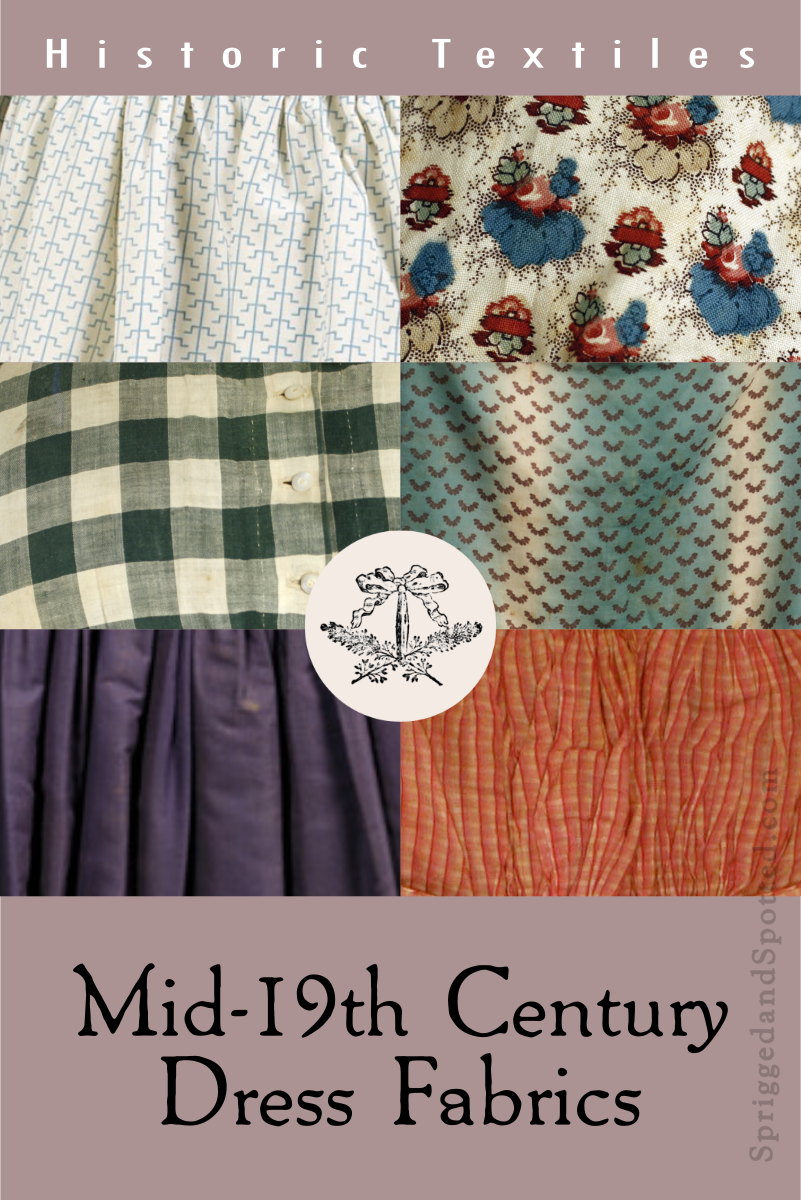
    Dress Fabrics of the 1830’s, 1840’s and 1850’s: A Reference.

    I enjoy sifting through museum collections online. It feels a bit like a treasure hunt and is way healthier than doom scrolling on social media. I’m grateful to the institutions who have made so much of their holdings available to members of the public like us. And, I want to share the gems and show them in context of other related items. In this case, I hope if you are trying to get an idea of textile trends in mid-19th century America, you will find this resource useful.


    Explore more 19th Century Clothing through Photography

    Though 19th century photographs could not document the vibrant colors of people’s clothing, we can learn a lot from the display of patterns, textures, and styles of construction as they were worn by real individuals. Browse my Pinterest board for interesting images of 19th century people.

    (more…)
  • Romanticized Myth or Pioneering Reality? [Mid-19th Century Sunbonnets, Part 2]

    Romanticized Myth or Pioneering Reality? [Mid-19th Century Sunbonnets, Part 2]

    If you haven’t read Part 1, start there.

    The Sunbonnet: Genuine frontier clothing, or inaccurate cliché?

    Picture in your mind a woman of the 1800’s living on the American frontier. What do you see? She is probably riding in a covered wagon or hanging laundry nearby a log cabin. This woman is likely wearing a printed cotton “calico” dress, an apron, and a sunbonnet.

    Perhaps the enduring popularity of iconic stories written by Laura Ingalls Wilder and Mark Twain, including Little House on the Prairie and Huckleberry Finn, have aided in the perpetuation of this image. Surely other pop-culture touchstones, such as the TV version of “Little House” and the Oregon Trail computer game of the 1990’s, have contributed as well.

    Many generations after falling from use, the pioneer woman’s headwear has nevertheless remained intact in our imaginations. But, is this durable image of the bonnet-wearing American woman leading a life of hardship on the edge of civilization based in truth? Or, like the iconic double-horned helmet which we erroneously associate with Viking warriors, is the sunbonnet merely a persistent modern myth? I had to find out for myself whether the cliché of a pioneer woman in a sunbonnet is based in reality or fiction.

    (more…)