Category: Historic Objects

  • The Art of the Pinking Iron: A Historic Object Study

    The Art of the Pinking Iron: A Historic Object Study

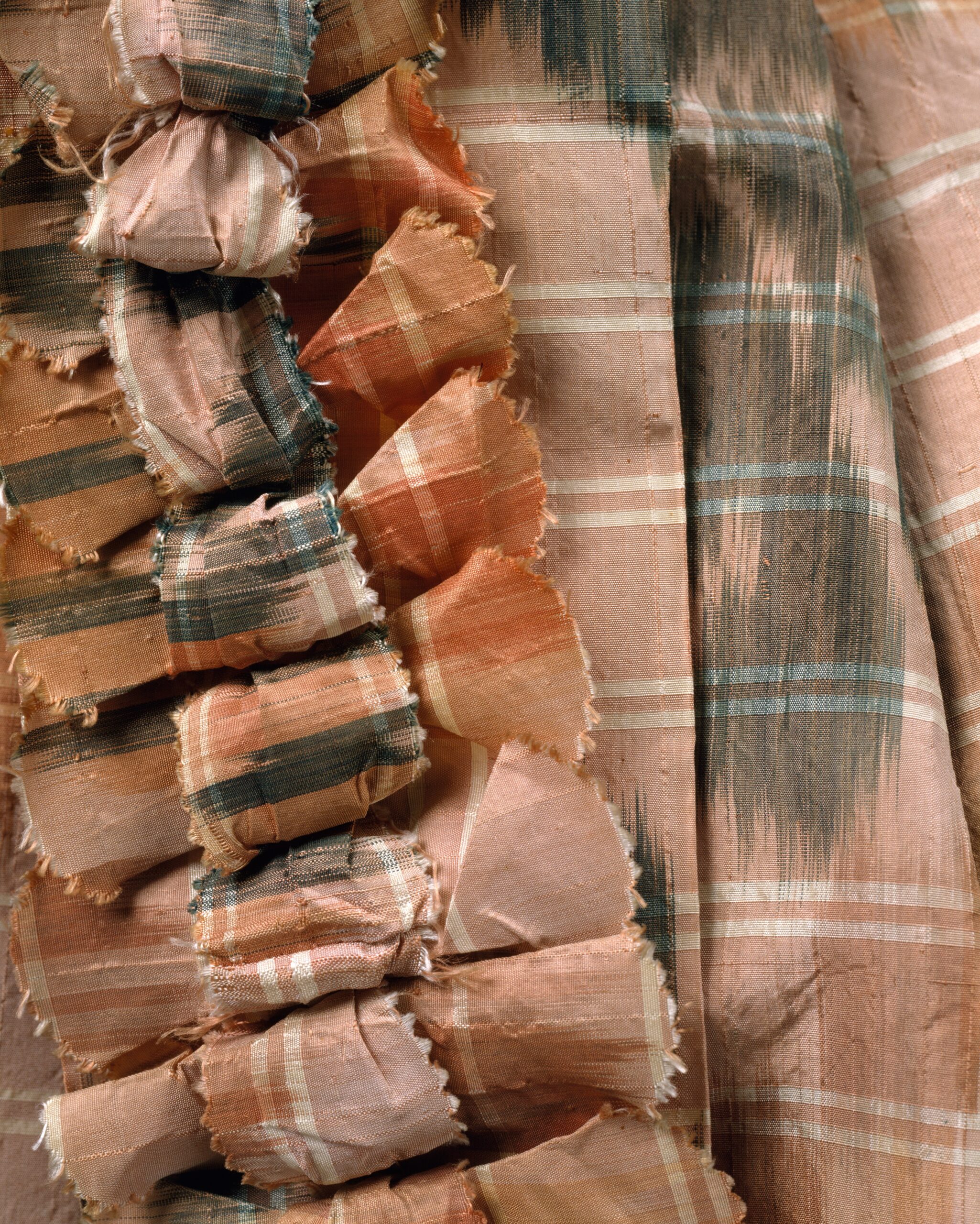
    An examination of pinking irons shows us how swings of a mallet can turn strips of cloth into beautiful adornments.

    Clothing is important to all of us.

    We all are keenly aware that apparel is not merely functional (protects our body), but serves as a vehicle for communicating with the world around us.

    What does your clothing say about your social class? What does it say about your awareness of style trends? What “words” does it use to communicate the message?

    Perhaps it’s the way the garment is cut, how it hangs on your frame. The condition of the fabric, whether shabby or pristine, can make an impression. Do your clothes create a silhouette that is also favored by influential people? Does it let you blend seamlessly in with the crowd? Can the item be washed over and over and remain in good shape, or does it require costly care and maintenance? How rare and laborious to make are the materials and embellishments?

    (more…)
  • Revival of a Treadle Sewing Machine – 1910s “Minnesota Model A” [Restoration and Use]

    Revival of a Treadle Sewing Machine – 1910s “Minnesota Model A” [Restoration and Use]

    The Magic of Man-powered Machinery

    Machine head of a 1910s treadle sewing machine. Restored, threaded, and used for sewing fabric in the 21st century.

    I try to remind myself to be grateful for modern conveniences. While I have been known to romanticize the past on occasion, there is something undeniably miraculous about watching the trail of stitches emanate from under the foot of a 110-year-old treadle driven sewing machine.

    I happily concede that electric motors, in their various applications, have spared humans an immeasurable quantity of proverbial elbow grease. In industrial settings, electric sewing machines increased production capacity many fold. On the other hand, for the casual home seamstress (or seamster), the addition of electricity traded some of the one-ness with their machine for a margin of efficiency. Only a few minutes might be shaved off for someone making one-of-a-kind garments compared to the hours saved by a factory worker sewing piles of identical seams assembly-line style. Anyone who has turned yardage of fabric into a unique finished wearable garment understands that much of the time spent “sewing” is actually dedicated to pressing, cutting, pinning, seam-ripping, and hand-finishing. Stitching under the foot of a sewing machine is but one part of the larger list of tasks.

    (more…)
  • 6 Reasons Why This Historic Photo of St. Louis is Amazing [Mid-19th Century Sunbonnets, Part 3]

    6 Reasons Why This Historic Photo of St. Louis is Amazing [Mid-19th Century Sunbonnets, Part 3]

    In Part 2 of this series, I concluded that despite scarce photographic evidence, American women who participated in the movement West in the early to mid-19th century really did wear sunbonnets on a regular basis. Surviving physical examples, newspaper references, and written recollections help to paint a picture of the frequency with which sunbonnets would have been in use. While researching the topic, I came across a rare and unusual photo taken in St. Louis, Missouri in 1848, showing a large group of women and girls wearing sunbonnets. After looking at thousands of daguerreotypes in online collections, this photograph stood out as unique and compelling.

    (more…)
  • Lost Greetings: Postcards from the Past Revisited

    Lost Greetings: Postcards from the Past Revisited

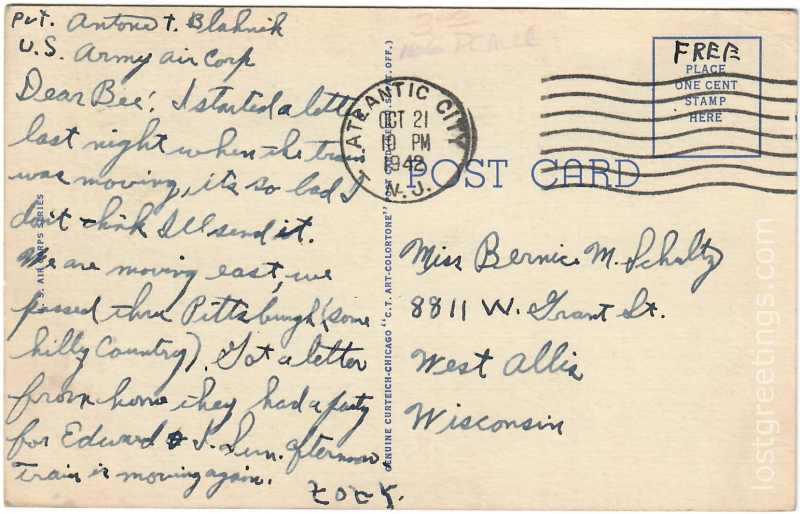
    Mr. Willoughby was a favorite teacher of mine during high school, and I still count him as a friend in adulthood. A former Army officer and veteran of the Vietnam War turned history teacher, he formed lasting relationships with his students. And, the giant bulletin board hanging at the rear of his classroom attested to his impact. It was covered in postcards sent to him by his current and former pupils, in some places the cards were several layers deep.

    (more…)