Tag: history

  • Revival of a Treadle Sewing Machine – 1910s “Minnesota Model A” [Restoration and Use]

    Revival of a Treadle Sewing Machine – 1910s “Minnesota Model A” [Restoration and Use]

    The Magic of Man-powered Machinery

    Machine head of a 1910s treadle sewing machine. Restored, threaded, and used for sewing fabric in the 21st century.

    I try to remind myself to be grateful for modern conveniences. While I have been known to romanticize the past on occasion, there is something undeniably miraculous about watching the trail of stitches emanate from under the foot of a 110-year-old treadle driven sewing machine.

    I happily concede that electric motors, in their various applications, have spared humans an immeasurable quantity of proverbial elbow grease. In industrial settings, electric sewing machines increased production capacity many fold. On the other hand, for the casual home seamstress (or seamster), the addition of electricity traded some of the one-ness with their machine for a margin of efficiency. Only a few minutes might be shaved off for someone making one-of-a-kind garments compared to the hours saved by a factory worker sewing piles of identical seams assembly-line style. Anyone who has turned yardage of fabric into a unique finished wearable garment understands that much of the time spent “sewing” is actually dedicated to pressing, cutting, pinning, seam-ripping, and hand-finishing. Stitching under the foot of a sewing machine is but one part of the larger list of tasks.

    (more…)
  • Traditional Trades & Professions Quiz – Level 2 (Medium)

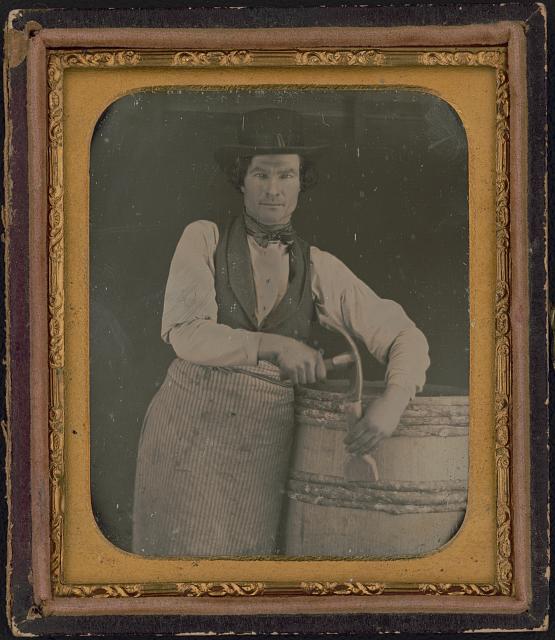
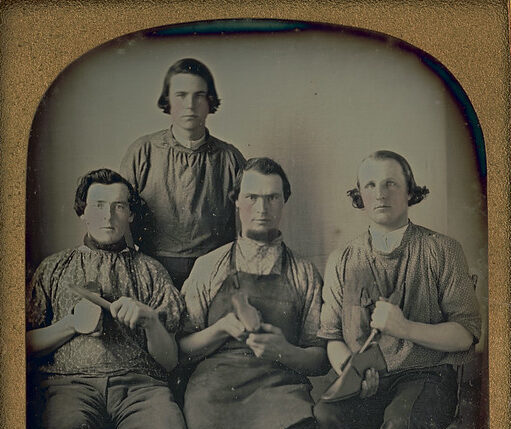
    Traditional Trades & Professions Quiz – Level 2 (Medium)

    Test your knowledge of slightly obscure historical trades and traditional vocations. “Level 2” features terminology which might be familiar to many English speakers, but many questions may stump you. Are you up to the task?

    (more…)
  • Traditional Trades & Professions Quiz – Level 1 (Easy)

    Traditional Trades & Professions Quiz – Level 1 (Easy)

    Test your knowledge of historical trades and traditional jobs. “Level 1” features terminology which should be familiar to many English speakers, but some questions may still prove tricky. See how well you can do.

    (more…)
  • Romanticized Myth or Pioneering Reality? [Mid-19th Century Sunbonnets, Part 2]

    Romanticized Myth or Pioneering Reality? [Mid-19th Century Sunbonnets, Part 2]

    If you haven’t read Part 1, start there.

    The Sunbonnet: Genuine frontier clothing, or inaccurate cliché?

    Picture in your mind a woman of the 1800’s living on the American frontier. What do you see? She is probably riding in a covered wagon or hanging laundry nearby a log cabin. This woman is likely wearing a printed cotton “calico” dress, an apron, and a sunbonnet.

    Perhaps the enduring popularity of iconic stories written by Laura Ingalls Wilder and Mark Twain, including Little House on the Prairie and Huckleberry Finn, have aided in the perpetuation of this image. Surely other pop-culture touchstones, such as the TV version of “Little House” and the Oregon Trail computer game of the 1990’s, have contributed as well.

    Many generations after falling from use, the pioneer woman’s headwear has nevertheless remained intact in our imaginations. But, is this durable image of the bonnet-wearing American woman leading a life of hardship on the edge of civilization based in truth? Or, like the iconic double-horned helmet which we erroneously associate with Viking warriors, is the sunbonnet merely a persistent modern myth? I had to find out for myself whether the cliché of a pioneer woman in a sunbonnet is based in reality or fiction.

    (more…)
  • Snarky skincare advice for backwoods women [Mid-19th Century Sunbonnets, Part 1]

    Snarky skincare advice for backwoods women [Mid-19th Century Sunbonnets, Part 1]

    Why did 19th century women wear their sun bonnets, or not?

    Women who don’t wear bonnets…

    • make themselves “as rough and coarse as ever [they] can, by way of being independent.”
    • look– at age 26– “like a runnet* bag that had hung six weeks in the chimney corner”
    • make themselves “too ugly for any use except scaring the crows off the corn”

    …according to a Missouri newspaper column published in 1849.

    * A rennet-bag is the fourth stomach of a ruminant (cow), a traditional natural source of enzymes for making cheese.

    (more…)